
A complete guide to Exeter, Devon — what to see, where to eat, and door-to-door private chauffeur transfers from London from £860.


Exeter carries two thousand years of continuous occupation within a remarkably compact city centre, from the Roman walls that still define its topography to the medieval cathedral of St Peter, whose unbroken Gothic nave is among the finest in England. The River Exe brings light and movement to the western edge of the city, and the sea feels — because it very nearly is — within reach.
Despite its deep historical roots, Exeter moves at a lively pace, animated by the University of Exeter, a thriving independent retail quarter along Gandy Street, and a cultural programme that belies its modest size. It is, above all, a city that rewards those who look up — at the cathedral's carved west front, at the Georgian terraces on the higher streets, at the exposed sections of Roman wall threading between modern buildings.
The Romans founded Isca Dumnoniorum here in the first century AD, making Exeter one of the four principal Roman cities of Britain, and significant sections of the original defensive walls survive to a remarkable height, forming the longest and best-preserved Roman city walls in England. The Normans built a castle — Rougemont — whose gatehouse still stands, and the medieval cathedral, begun in the eleventh century and largely rebuilt in the thirteenth and fourteenth, represents a sustained artistic achievement of the first order. The Guildhall on the High Street is reputedly the oldest municipal building in continuous use in England.

Exeter's food scene is anchored by its farmers' markets and the produce of Devon's exceptional agricultural hinterland: cream, beef, seafood and cider from the county's farms, dairies and fishing boats arrive in abundance. The Quayside and the central streets support a range of independent restaurants and cafés with a distinctly south-western character, and the city has long sustained a confident wine and cocktail bar culture fed by its student population.
The Exe Estuary to the south of the city is one of the most important bird habitats in the south-west, and the Exe Valley Way walking route follows the river northward into the fringes of Dartmoor National Park. Dartmoor itself begins roughly fifteen miles to the west, offering moorland walking of extraordinary grandeur. The Devon coast — both the East Devon World Heritage cliff scenery and the red-sand beaches near Exmouth — is accessible within thirty to forty minutes.

Exeter has a year-round cultural calendar sustained by the University, the Northcott Theatre, the Phoenix arts centre and a strong live music scene. The city's annual food festivals draw producers from across the south-west, and its independent bookshops and gallery spaces give the centre a creative density unusual in a city of its size. History permeates even everyday life here — the Cathedral Yard hosts outdoor performances in summer against a backdrop that no architect could improve upon.
Exeter city centre is best explored on foot; the compact historic core means the cathedral, Roman walls, Guildhall and Quayside are all within comfortable walking distance of one another. A car becomes valuable for day trips onto Dartmoor or to the coast, both of which are straightforward from Exeter.
Door-to-door, per vehicle, locked at booking — from Central London and every major London airport.
| From | Distance | E-Class | V-Class | S-Class · BMW 7 | Sprinter (16) | |
|---|---|---|---|---|---|---|
| Central London | 200 mi | £860 | £1075 | £1290 | £1720 | |
| Heathrow Airport | 175 mi | £763 | £954 | £1145 | £1526 | |
| Gatwick Airport | 185 mi | £802 | £1003 | £1203 | £1604 | |
| Stansted Airport | 200 mi | £860 | £1075 | £1290 | £1720 | |
| Luton Airport | 175 mi | £763 | £954 | £1145 | £1526 | |
| London City Airport | 180 mi | £782 | £978 | £1173 | £1564 |

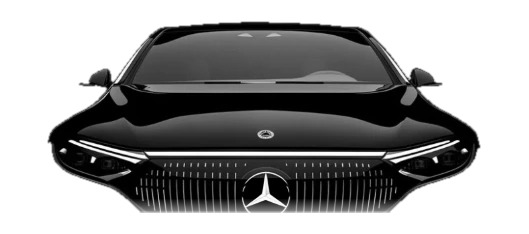



Fixed price, professional chauffeur, luxury fleet — your driver can wait while you explore, then carry you home.
All Destinations